Universal Design Style
Bringing Together Universal Design and Style
How to Build a Wheelchair Ramp: A Step-by-Step Guide for Safe and Accessible Access (Residential)
Quick Answer: How Do You Build a Wheelchair Ramp?
To build a safe wheelchair ramp:
-
Measure the total vertical rise from ground to doorway.
-
Use a 1:12 ratio for the slope. So for every inch high, go one foot out. For example, a 10 inch vertical distance would need a 10 foot long ramp.
-
Build the ramp at least 36 inches wide.
-
Install handrails if the rise exceeds 6 inches.
-
Add level landings at the top and bottom.
-
Use pressure-treated lumber and galvanized hardware.
-
Follow local building codes and the Americans with Disabilities Act (ADA) slope guidelines.
The recommended ramp slope is 1 inch of rise for every 12 inches of length (1:12 ratio).
1. Plan The Ramp Layout
The most critical factor in ramp safety is the slope.
- What is the 1:12 Ratio? For every 1 inch of vertical rise, the ramp must have 12 inches of horizontal run. Factor in existing ground slope when measuring vertical distance.
- Can I go steeper? 1:12 is the ADA requirement and recommended for residential use. Sometimes a slightly steeper 1:10 or 1:8 slope can be used if space is limited or a power wheelchair is used. Check local building codes to ensure theses allowed.
- Ramp Direction. In general, ramps can be a straight run, L-Shaped, U- Shaped, for have a slight curve. L or U Shaped ramps need level landings at the turns. 5 foot x 5 foot minimum landings are required for ADA compliance.
- Ramp Length. ADA requires a level resting area every 30 feet.
- Top Landings. Landings at the top of a ramp are important, especially when leading to a door. Opening a door while using a wheelchair is much easier on a level surface than on a ramp. Beside to factor in the door swing and give enough space. Keep at least 18-24 inches of landing space on the latch side of doors.
- Local Building Codes. Be aware of local building codes. Setback laws may limit how far out a ramp can be built.


2. Planning and Materials
Essential Tools
-
Circular saw and miter saw
-
Power drill and driver
-
Level (a 4-foot level is best)
-
Tape measure and chalk line
-
Safety gear (goggles, gloves, ear protection)
Suggested Materials
-
Pressure-treated lumber: For the frame and structural support.
-
Decking boards: Pressure treated lumber or composite boards
-
Exterior-grade screws: Specifically rated for pressure-treated wood
- Concrete: For footings to prevent settling and bottom landing.
- Metal transition plate: Metal plate at the bottom of a ramp to smoothly transition to the landing.
- Typical lumber sizes:
- 2×6 or 2×8 Ledger board, joists, and headers
- 2×6 Decking
- 2×10 or 2×12 Ramp stringers
- 2×4 Railings
- 2×2 Balusters
3. Step-by-Step Construction
Phase 1: Prep and Footings
Measure the total rise from the ground to the threshold of the doorway. Calculate your ramp length based on the 1:12 ratio.
-
Clear the area and mark the path of the ramp.
-
Dig holes for your footings at the start, end, and intervals along the ramp length. Footings and posts should be spaced 6 feet max.
-
Pour concrete footings to ensure a stable base that won’t shift with the seasons.
-
Posts can either be partially submerged in the concrete footing or sit on top with a post anchor. Local building codes may dictate this.
Phase 2: Building the Frame
Construct the frame using pressure-treated 2×6 or 2×8 lumber.
-
Ledger Board: Properly secure a ledger board according to your local building code.
- Post Connections: Connect framing to posts according to local building codes. Typically with lag screws or bolts.
-
Support: Ensure your joists and stringers are spaced no more than 16 inches on-center to prevent sagging. Or 12 inches max for composite decking. Use joist hangers when installing.
Phase 3: Decking and Surface
- Decking: Attach your decking boards perpendicular to the direction of travel to provide natural grip. Leave a small gap (approx. 1/8 inch) between boards for drainage. Screw to the framing.
- Bottom Transition: Install at least a 12 inch metal plate at the bottom of the ramp to transition to the landing. This creates a smooth transition and prevents problems from warping deck boards.
Phase 4: Handrails and Edging
Install handrails on both sides of the ramp. They should be between 34 and 38 inches high. Space between handrails should be at least 36 inches.
-
Edge Protection: Add a “curb” or kickplate (at least 2 inches high) along the bottom edge of the ramp to prevent wheelchair casters from slipping off the side.
- Balusters: If the vertical distance is over 30 inches, balusters are recommended or required by local building code. Balusters should be spaced so that nothing larger than a 4 inch sphere can fit between them. This is to prevent the heads of children getting through.
4. Maintenance Checklist
-
Monthly: Check for loose screws or warped boards.
-
Bi-Annually: Clean the surface to prevent algae or mold buildup, which creates a slippery surface.
-
Yearly: Re-apply sealant or slip-resistant coating if necessary. Wait at least 3 months before applying a stain, sealant, or paint on pressure treated lumber. This allows the lumber to dry out and accept those applications better. Applying sooner can cause swelling and warping.
About the Author: Accessibility Expert
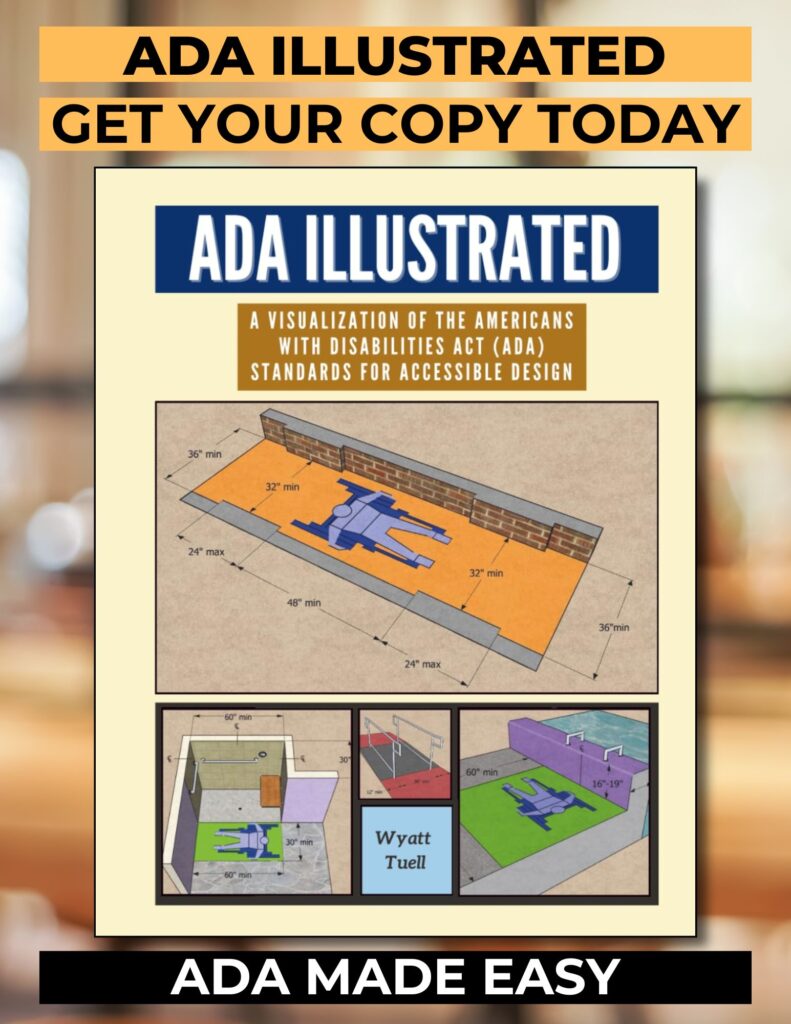
Wyatt Tuell is a City Planner with the City of Omaha and has over 20 years of experience making homes accessible for people with disabilities. Over his career in the non-profit and government, Wyatt has overseen over 500 home accessibility projects. He is also the author of ADA Illustrated, which is a visualization of the ADA design standards. With over 250 3D illustrations, this book makes building codes easy to understand for everyone. Get your copy here.